Pub.lished Movie Reviews
It's a Wonderful Life (1946)
"Frank Capra's most relentless lump-in-the-throat movie... In its own slurpy, bittersweet way, the picture is well done." - Pauline Kael
"It's a Wonderful Life" is a heartwarmingly delightful Christmas tale. It elegantly addresses profound themes such as mid life crises, economic depressions, bank runs (which occurred before federal bank insurance was established), suicidal ideation, and particularly, the central theme of selflessness and community versus corporate greed.
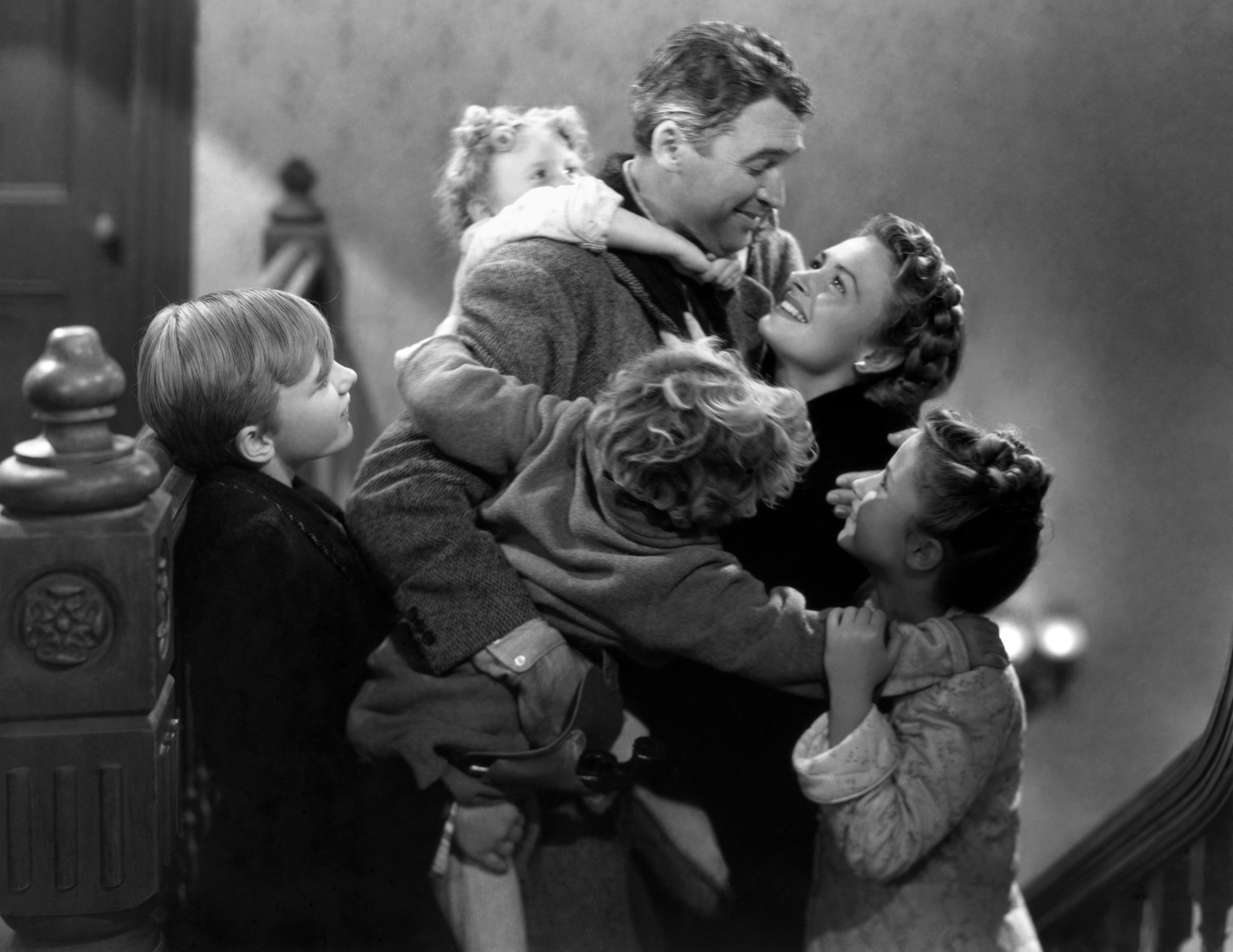
The film stars Jimmy Stewart as George Bailey, a man whose dreams of an adventurous life are thwarted by the simple reality that his town needs him to stay. However, due to a seemingly minor but catastrophic clerical error, George faces shame and ruin, and begins to resent the town and its residents to whom he has devoted his life. George, in despair, turns to alcohol and contemplates suicide, when an angel intervenes, showing him what the fictional town of Bedford Falls would become without him.
This film loosely draws inspiration from Dickens' "A Christmas Carol," but with an opposing premise. Instead of showing a wicked man the impact of his cruel life, this movie focuses on a good man who, in a moment of utter despair, is shown by an angel the influence of his existence on his town. Unseen by George, Potter (a greedy and unscrupulous tycoon) is the Scrooge-like character whose unrelenting greed is the root of George's troubles; Potter even plots the downfall of the entire town to amass wealth at a significant discount. Potter aims for George's savings and loan to go bankrupt, and a wrongful conviction for George would only be a bonus.
Often remembered as the movie where Jimmy Stewart glimpses a world without his existence, viewers tend to overlook the fact that this comprises only the final half hour of the two and a half hour film. The initial two hours paint a portrait of a relatable, ordinary life. It captures the journey of a young man with dreams, making sacrifices, finding love and happiness, fulfilling responsibilities, enduring disappointments, and seizing opportunities. The beauty of life is often found in the mundane; it's an ensemble of moments, each drop contributing to a bucket that one day becomes our existence.
As I age, I've started realizing that disappointment in life often stems from disappointment in oneself. A nagging belief that had we been smarter, braver, or bolder, we might have achieved more substantial accomplishments. It's a strange paradox where we're reluctant to appreciate what we have, as it feels like we're consoling ourselves for not achieving greatness. Such dissatisfaction can breed bitterness, seemingly directed towards external entities - family, friends, colleagues, but in reality, it's a mirror reflecting our internal struggle.
It's A Wonderful Life is the tale of an average man grappling with self-resentment, eventually realizing the value of his existence. Each time his brother raises a toast, saying, "To my big brother, George. The richest man in town," it always moves me. This film beautifully illustrates that the richness of life doesn't lie in material wealth, but in the lives touched, the bonds formed, and the love shared.
Though it received mixed reviews and did poorly at the box office upon its initial release, this film has consistently been ranked among the best ever made; it is a favorite of Spielberg, and Orson Welles declared it impossible to hate. It received a number of award nominations but only won a technical award. Its popularity skyrocketed in the 70s when it was mistakenly believed to have entered the public domain, leading to widespread Christmas broadcasts on TV. This led to a critical reassessment of the film, and it soon became a beloved classic. As Roger Ebert stated, some excellent movies are best watched only once, but "It's a Wonderful Life" improves with each viewing.
In addition to a strong commentary on the value of a life well lived, this film powerfully criticizes corporate greed and avarice, to the extent that it was once accused by the FBI of being a piece of communist propaganda. Yet it faded into obscurity until a clerical error put it in the public domain. Once corporations could no longer profit on this movie, TV broadcasters played this movie every Christmas until it became a favorite of many. What would the world look like if corporations hadn't greedily extended copyright to an utterly egregious 95 years? This movie gives you a glimpse into a world where copyright lasted a more reasonable 30 years from publication date. Sadly, it is yet again fading into obscurity, as a lawyer figured out someone still owned a copyright on the underlying short story, and now only one TV station is entitled to broadcast this movie.
"...the film represented rather obvious attempts to discredit bankers by casting Lionel Barrymore as a 'scrooge-type' so that he would be the most hated man in the picture. This...is a common trick used by Communists." - FBI Memo, 1947
- You do not enjoy films with themes of self-reflection and gratitude for life's simple blessings
- You do not enjoy films that are significantly centered around Christmas holidays
- You aren't a fan of fantasy or life-altering kind of movies
- You get easily bored with black and white movies
- You are looking for a fast-paced action or horror themed movie
- You struggle to understand and follow older, classic English
The Bishop's Wife (1947):
If you enjoyed "It's a Wonderful Life" for its heartfelt message and holiday theme, you will likely appreciate "The Bishop's Wife." Directed by Henry Koster, this charming film revolves around a Bishop who is visited by an angel disguised as a human being. The film's quintessential yuletide warmth, along with extraordinary performances led by Cary Grant, make it a delightful cinematic experience.
Meet Me in St. Louis (1944):Given the blend of warmth, family values, and the joyous spirit of Christmas in "It's a Wonderful Life", "Meet Me in St. Louis" would be another profitable recommendation. This film, directed by Vincente Minnelli, stars Judy Garland and is perhaps best known for introducing the song "Have Yourself a Merry Little Christmas." It's a heartwarming musical that explores the intricacies of love and family, much like the beloved Frank Capra classic.
Mr. Smith Goes to Washington (1939):Directed by Frank Capra, the same director of "It's a Wonderful Life", "Mr. Smith Goes to Washington" deals with similar themes of integrity, earnestness, and the battle of small-time kindness against big-time corruption. Starring James Stewart, the film offers thought-provoking social commentary wrapped in a compelling narrative, perhaps resonating with the same sensibilities you appreciated in "It's a Wonderful Life".
Miracle on 34th Street (1947):If the magical element in "It's a Wonderful Life" added to your enjoyment, "Miracle on 34th Street" might be right up your alley. This uplifting film tells the story of an old man who asserts his identity as the true Santa Claus, causing a sensation across New York City. Like "It's a Wonderful Life", this film delivers a wholesome message about trust, faith, and the power of belief.
Remember the Night (1940):"Remember the Night" is another film that intricately weaves the joy of Christmas with complex human relationships and emotional depth, much like "It's a Wonderful Life". Directed by Mitchell Leisen, it's a romantic comedy-drama that depicts how a shoplifter and a district attorney unexpectedly find love during the holiday season.
Like this? Then click here to see more drama movies