Pub.lished Movie Reviews
Ninotchka (1939)
"There's a jeering cynicism built into the script: the Russians don't defect for freedom but for consumer goods." - Pauline Kael
"Ninotchka" begins as a comedy and then transitions into a romance in the second half. Its comedic aspect is filled with brilliant wit and memorable one-liners that left me chuckling the next day.
The premise of the story is impressively original, even after eighty years. It revolves around a Russian woman, deeply rooted in Bolshevist ideals, who travels to capitalist Paris. Despite her initial reservations, she begins to enjoy herself and becomes increasingly drawn to the city.
Ninotchka, although an idealist, is not naive. She possesses a will of steel and a matching intellect. Greta Garbo's portrayal of her character is powerful, with a simple glance conveying strength. The question, however, is whether her strong resolve can withstand the infamous Parisian allure of romance?
Melvyn Douglas plays Leon, who falls deeply in love with a woman unlike any he has encountered before. He employs all his charm to win her over. But there's a twist — he may also be interested in her jewels, the ones Russia confiscated from a Russian countess. The same countess who is also in Paris, and in love with Leon. We have a love triangle, a potential jewel heist, and a romantic comedy all in one film.
The romance aspect is well-executed for those who appreciate it, though it's not my personal preference. I mused that my wife would have enjoyed the latter half more than I did.
The film has one peculiar aspect: the accents. The Russians new to Paris attempt varying Eastern European accents, while the American actors playing Russians with a Parisian touch adopt a vaguely British accent. This is typical for films of this era. However, it's somewhat jarring when Ninotchka, seduced by the charm of Paris, switches to a Western European accent. That is when I started thinking less about the movie itself, and more about why Parisians sounded vaguely English yet the Russians sounded almost, but not quite, Russian.
Although Garbo, who plays a Russian embodying the best of Russia, is the film's star, Russia still banned the movie. Russia is depicted as struggling domestically and internationally. The initial envoys sent to Paris to oversee the sale of seized Russian noble jewels are portrayed as charming but bumbling fools. This movie is one of the first to have such a strong female lead. The Soviet Union, from its inception, promoted the idea of gender equality as part of its ideological stance against the bourgeois norms of the pre-revolutionary society. Women were encouraged to work in all sectors of the economy and to participate in the political life of the nation. The state instituted policies to facilitate women's participation in the workforce, such as childcare services and maternity leave. Perhaps this is why a Russian character was one of the first showcasing a strong, independent woman navigating a traditionally male-dominated world.
When the film was released, Ninotchka was marketed with the catchphrase "Garbo Laughs!" This was a play on the famous "Garbo Talks!" ad campaign used for her first "talkie" debut in Anna Christie (1930). Up until "Ninotchka," Greta Garbo was primarily known for her roles in dramatic films, portraying mysterious, elusive, and often tragic characters associated with intensity, melancholy, and tragedy. The moment she laughed symbolized not just a change in her character's outlook within the story, but also a transformation in Garbo's career, showing audiences that she was versatile enough to handle comedy with the same grace and skill as drama.
"Ninotchka" was directed by Ernst Lubitsch, a filmmaker renowned for his sophisticated comedies and unique storytelling style, often referred to as the "Lubitsch Touch." The anticipation of seeing Garbo, a serious and dramatic actress, in a Lubitsch comedy added an extra layer of excitement. Also at the time of its release, the world was on the brink of World War II, and the film's comedic take on the Soviet Union, combined with Garbo's portrayal of a stern Soviet envoy who eventually warms up to the charms of the West (embodied in her laughter), resonated with audiences. It provided a light-hearted, escapist experience during a period of growing tension.
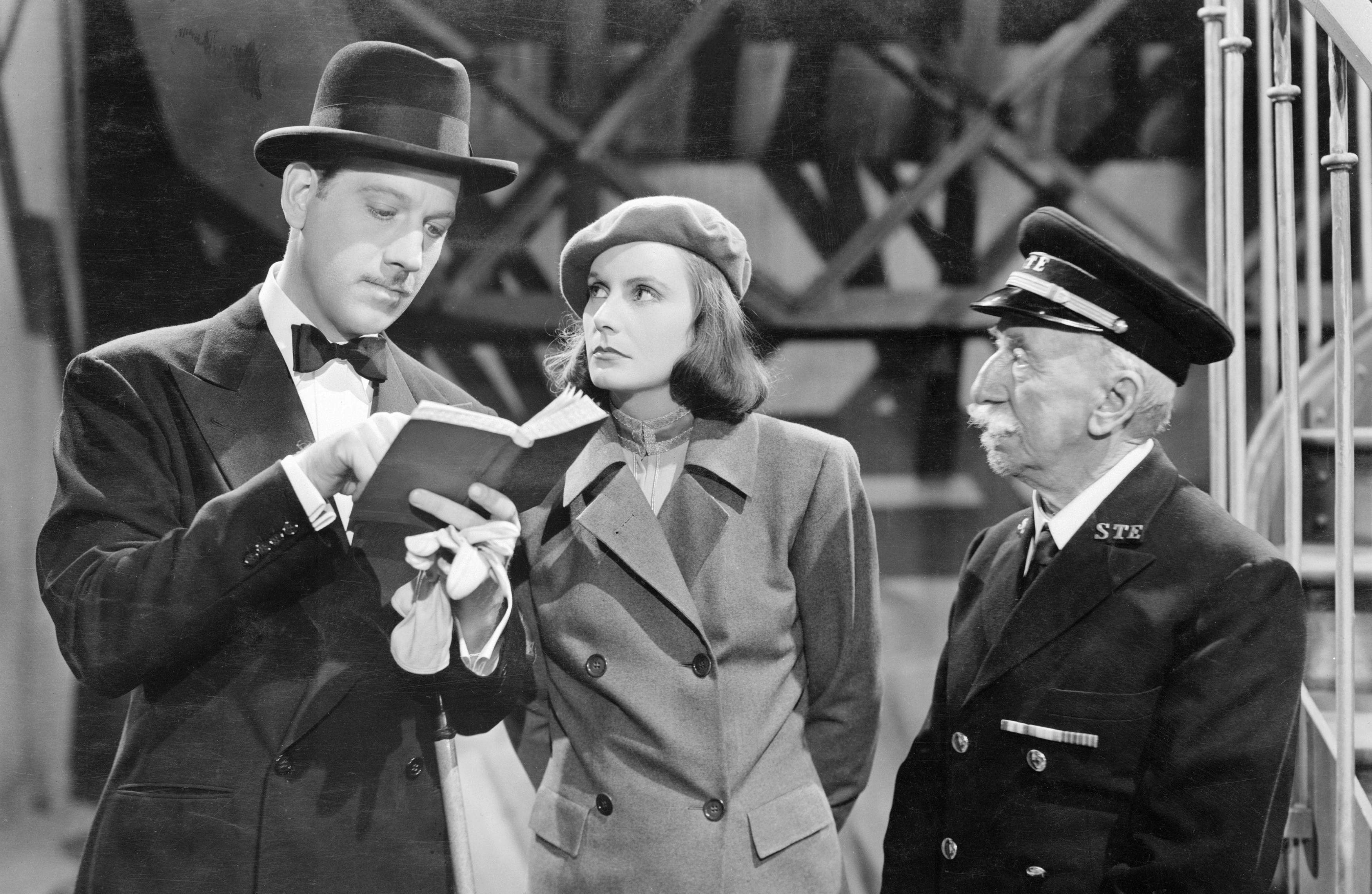
"How are things in Moscow?"
"Very Good. The last mass trials were a great success. There are going to be fewer but better Russians."
- You are not a fan of black and white movies.
- You are uncomfortable with outdated societal norms depicted in a film, given this one was made in 1939.
- You dislike old-fashioned humor or slapstick.
- You prefer action, horror or thriller genres.
- You usually don't enjoy romantic comedies.
Warning: The following may contain spoilers:
What's the deal with "Ninotchka"? I mean, here we have a movie set in Paris, the city of love, and our leading lady is a stern Russian envoy who's more interested in the five-year economic plan than a five-course French meal.
And let's talk about Melvyn Douglas' character, Count Leon. The guy's a count who doesn't have a castle, a count without a country, a count who counts on charming women to pay his bills! Does this count even count? It's like he's a count on a discount!
And then there's the hat scene. Ninotchka, this stern, no-nonsense woman, is won over by a ridiculously absurd hat. It's like seeing a vegan fall head over heels for a nice bit of hoof, and perhaps a little bit of snout!
In the end, "Ninotchka" is less of a love story set in Paris, and more like a comedy where the joke is communism! But hey, that's Hollywood for ya!
The Philadelphia Story (1940):
If you loved "Ninotchka," chances are you'll enjoy "The Philadelphia Story." This romantic comedy features a strong female lead, Catherine Hepburn, much like Greta Garbo in "Ninotchka." It's filled with witty dialogue and showcases the complex dynamics of love, making it a remarkable classic from Hollywood's Golden Age.
His Girl Friday (1940):Another recommendation is "His Girl Friday." Starring Cary Grant and Rosalind Russell, this film is noted for its rapid-fire dialogue and comedic rhythm, just like "Ninotchka." It's a story about a newspaper reporter who must stop his ex-wife from remarrying, offering plenty of laughs and dramatic moments.
Some Like It Hot (1959):Experience the synergy of comedy and romance all over again with "Some Like It Hot". Directed by Billy Wilder, who later was inspired by "Ninotchka" to make "Love in the Afternoon," this film includes plenty of humor, memorable performances, and playful storylines that are consistent with the characteristics central to "Ninotchka."
To Be or Not to Be (1942):You could also enjoy "To Be or Not to Be". It's a comedy set during WWII, from director Ernst Lubitsch who also directed "Ninotchka." The film presents a unique blend of comedy, drama, and war/spy elements that you might appreciate given your love for "Ninotchka".
Sabrina (1954):The beautiful romance and clever comedy of "Sabrina" are reminiscent of "Ninotchka". Furnished with a heartwarming narrative about a chauffeur's daughter falling in love with a son of a wealthy family, this film exudes all the charm and elegance inherent in classic romantic comedies.
Like this? Then click here to see more comedy movies