Pub.lished Movie Reviews
The Big Country (1958)
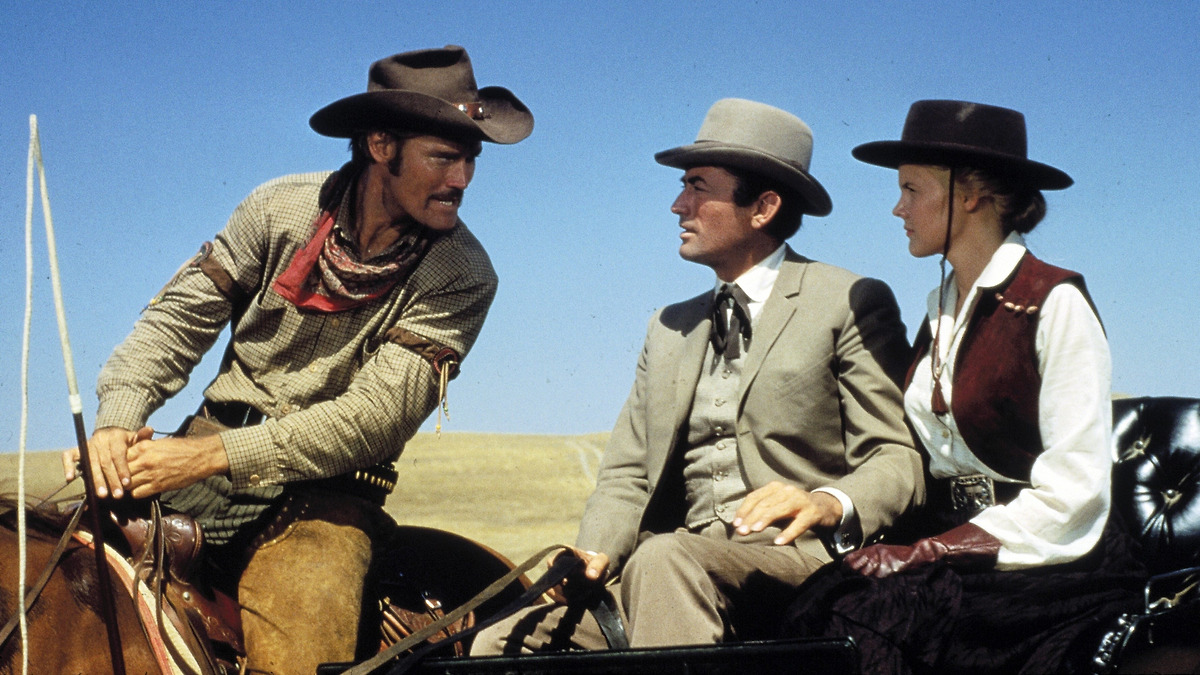
"The Big Country" (1958) is an intriguing twist on the traditional Western genre. It's set in the 1880s, where a New England sea captain arrives at his fiancée's sprawling Texas ranch and becomes entangled in a feud between two families over a valuable piece of land.
Most Westerns present a narrative where a city slicker from New York struggles to adapt to cowboy ways until they eventually learn to appreciate the country lifestyle or decide to leave. However, "The Big Country" is a different breed of Western, an anti-Western, so to speak. It comments on the machismo trope frequently portrayed in Westerns of that era.
The protagonist, McKay, is an Easterner who doesn't conform to the ways of the Old West. McKay's character is a departure from the norm, as he remains too stubborn to leave and too proud to resort to needless violence or displays of masculinity. The film portrays him as being right in his actions, while the trigger-happy ways of the Westerners lead to a downward spiral of violence.
However, it seems that McKay gets lucky an awful lot. He might be an expert in surviving in the back country alone, or a master at judging people and their capacity for dignity and fairness. Or, he could just be an overly confident fool who survives more through dumb luck than any real skill. I was surprised to hear a Captain claim that keel hauling is a hazing ritual, which it's most certainly not.
McKay's journey begins when he falls in love with a tourist on his boat, leading him to travel thousands of miles to meet her and her father. Undeterred by the harsh, barren landscape of the 1860s or 1890s, he ventures out with nothing but a compass and probably some water, disregarding any advice or warnings about the dangers he might face.
Despite the risks, McKay manages to return safely to the homestead, where he avoids a fight over his recklessness, only to seek out the same confrontation later. The ensuing battle is unbelievably drawn out, with both men taking hit after hit without knocking each other out. His opponent, surprisingly, ends up respecting him.
Another fight later on sees McKay's life hanging in the balance, saved only by unexpected assistance. It seems that his survival relies more on dumb luck than anything else.
McKay's journey is filled with fortunate occurrences. He finds prime land to buy, wins the heart of a woman, settles a long-standing dispute between feuding families, and even manages to tame a horse through the simple but risky act of falling off it repeatedly without breaking any bones.
While many Westerns tend to over glamorize the rugged and wild nature of the West, "The Big Country" goes to the other extreme. It glorifies the restrained toughness of civilized gentlemen, to the point where it begs the question whether the screenwriters and director have ever even camped in the wild, let alone tried to survive in hostile territory.
- You're not a fan of classic western movies.
- Slow-paced storytelling bores you.
- Extreme depiction of violence and bloody scenes upset you.
- You prefer modern cinematography and special effects.
- You feel the run time of 2 hours and 45 minutes is too long for a movie.
Warning: The following may contain spoilers:
What's the deal with "The Big Country," huh? I mean, it's got Gregory Peck, Charlton Heston, and Burl Ives all in one film! It's like the Mount Rushmore of classic Hollywood, if Mount Rushmore had cowboy hats and was constantly squabbling over land and water rights!
The Magnificent Seven (1960)
Enthusiasts of "The Big Country" (1958) will likely enjoy "The Magnificent Seven" (1960) due to both films' exemplary representations of the classic Western genre. They both explore themes of heroism, honor, and the struggle between good and evil set against the sprawling backdrop of the American frontier. Each film boasts a star-studded cast, including Gregory Peck in "The Big Country" and Yul Brynner in "The Magnificent Seven," delivering memorable performances. Additionally, the films are lauded for their sweeping cinematography and iconic musical scores, further enhancing the immersion into their respective narratives.
The Adventures of Robin Hood (1938)Fanciers of "The Big Country" (1958) will appreciate "The Adventures of Robin Hood" (1938) as both films share the common thread of heroic figures standing against oppression, combined with spectacular cinematography capturing expansive outdoor settings. Moreover, just as "The Big Country" is renowned for its orchestral score, "The Adventures of Robin Hood" is also celebrated for its compelling musical score. Both films, directed by iconic filmmakers (William Wyler and Michael Curtiz respectively), feature all-star casts and belong to the golden age of Hollywood cinema, promising captivating performances and timeless storytelling.
From Here to Eternity (1953)Fanciers of "The Big Country" will also love "From Here to Eternity" as both films are iconic classics that delve into the human spirit and morality, set against sweeping, grand landscapes. Each film showcases strong performances by a powerful ensemble cast, which in "From Here to Eternity" includes Burt Lancaster, Montgomery Clift, and Frank Sinatra. Both films masterfully blend drama and romance, and they tackle themes of honor, love, and conflict. The compelling narrative and the emotional depth of the characters in "From Here to Eternity" echo the storytelling style of "The Big Country," making it a must-watch for its fans.
Shane (1953)Fanciers of "The Big Country" will also love "Shane" as both films are iconic entries in the Western genre, directed by acclaimed filmmakers (William Wyler and George Stevens, respectively). Both films explore themes of honor, courage, and the struggle between civilization and wilderness, set against the backdrop of expansive, beautifully shot landscapes. The powerful performances, particularly from Gregory Peck in "The Big Country" and Alan Ladd in "Shane," reflect complex, morally ambiguous characters that challenge traditional Western archetypes. The stirring scores and dramatic narratives in both films also heighten the emotional depth, making "Shane" a compelling watch for any "The Big Country" aficionado.
Stalag 17 (1953)"The Big Country" (1958) and "Stalag 17" (1953) are classics in their genres, offering immersive tales of human spirit, resilience, and character development against challenging backdrops. "The Big Country" is a western that explores themes of honor, courage, and romance, while "Stalag 17" is a war film that delves into survival, camaraderie, and wit in a German POW camp. These films share a common thread of dynamic storytelling, engaging characters, and excellent performances, particularly from their lead actors, Gregory Peck in "The Big Country" and William Holden in "Stalag 17." As such, fans of "The Big Country" would appreciate the similar depth and quality of storytelling in Stalag 17.
Mister Roberts (1955)"The Big Country" (1958) and "Mister Roberts" (1955) are classic films that showcase the mastery of storytelling from the Golden Age of Hollywood. Fans of "The Big Country" will appreciate the strong character development, moral themes, and stunning cinematography in "Mister Roberts." Notably, both films feature incredible casts, with "Mister Roberts" boasting stellar performances from Henry Fonda, Jack Lemmon, and James Cagney. Additionally, the two films share a similar narrative structure, focusing on men struggling against their conditions and asserting their individuality in restrictive environments, which creates a blend of drama, action, and subtle humor that will appeal to fans of "The Big Country."
The Bridge on the River Kwai (1957)Those who appreciate "The Big Country" (1958) will likely also enjoy "The Bridge on the River Kwai" (1957) due to the similar themes of honor, pride, and human conflict against grand landscapes. Both films are epic tales of men struggling with their own moral compasses amidst the pressures of external conflicts, and are set against the backdrop of vast and breathtaking scenery. The two movies also share a slow-building narrative style, a focus on character development, and are helmed by acclaimed directors (William Wyler and David Lean respectively), ensuring a comparable level of cinematic quality and storytelling prowess.
Ben-Hur (1959)Those who love "The Big Country" (1958) will appreciate "Ben-Hur" (1959) due to their shared elements of epic storytelling in a historical setting, characterized by grand cinematic landscapes, compelling character development, and complex themes of honor, love, and redemption. Both films are classic examples of high-budget Hollywood productions of their era and feature iconic performances, particularly from Charlton Heston. The intense action sequences, such as the chariot race in "Ben-Hur," can be compared to the gripping horse riding scenes in "The Big Country," offering a thrilling cinematic experience for fans of classic action-adventure films.
Operation Petticoat (1959)Those who love "The Big Country" (1958) will also love "Operation Petticoat" (1959) as both movies share a unique blend of drama, comedy, and action, presented through superb storytelling and star-studded casts. The Big Country's vast, open landscapes and grandiose cinematography mirror Operation Petticoat's expansive naval setting. Moreover, the interplay of conflict, camaraderie, and humor among characters, as showcased in the gripping Western rivalry in "The Big Country," is similarly depicted in the comedic military misadventures of "Operation Petticoat." The presence of Hollywood stalwart William Wyler in "The Big Country" and Blake Edwards in "Operation Petticoat" respectively ensure a high level of production quality that fans of classic cinema will appreciate.
High Noon (1952):High Noon is one of the classics in the Western genre. It stars Gary Cooper in an Oscar-winning performance as a town marshal who, despite disputes with his Quaker bride, is forced to face a returning vengeful outlaw alone. Much like The Big Country, this film explores themes of courage, moral responsibility, and the tough reality of the Old West.
True Grit (1969):John Wayne won his only Oscar for his role in True Grit as a one-eyed U.S. marshal helping a young woman track down her father's murderer. It's a film with shooter showdowns, wild adventures, and a lot of heart, reminiscent of the elements you appreciate in The Big Country.
The Searchers (1956):The Searchers, directed by John Ford and starring John Wayne, is another epic Western adventure. The movie is about a Confederate veteran's relentless quest to rescue his niece from an Indian tribe. Like The Big Country, it explores the deepest facets of the human experience—love, duty, and revenge, set against the rugged backdrop of the untamed West.
Rio Bravo (1959):Rio Bravo, directed by Howard Hawks, stars John Wayne, Dean Martin, and Ricky Nelson. This film focuses on a sheriff in a small town who enlists the help of a cripple, a drunk, and a young gunfighter in his efforts to hold a killer in jail. The film has a fair amount of humorous banter mixed with truly suspenseful scenes, just like The Big Country.
Gunfight at the OK Corral (1957):This is another great Western movie starring Burt Lancaster as the legendary Wyatt Earp and Kirk Douglas as the complex, hard-drinking Doc Holliday. It culminates in the legendary showdown at the OK Corral, and it's a classic story of loyalty and frontier justice that fans of The Big Country will surely enjoy.
Like this? Then click here to see more drama movies