Pub.lished Movie Reviews
The Shootist (1976)
"Don Siegel's directing lacks rhythm--each scene dies a separate death." - Pauline Kael
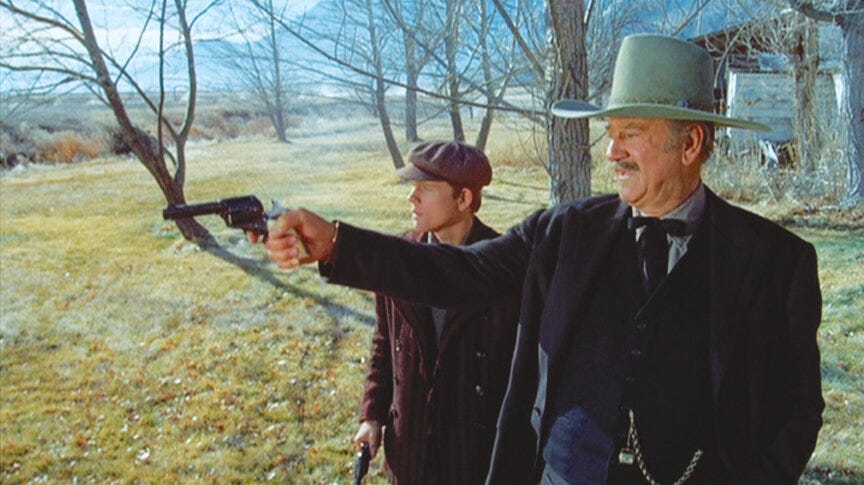
"The Shootist" (1976) is a poignant tale of a dying gunfighter searching for a dignified and painless end. John Wayne's performance is stunning in this film, which sadly mirrored his own impending death. It's a tough watch, knowing the reality of Wayne's health at the time, but the actor's steadfast resolve is echoed in his unforgettable line, "I won’t be wronged, I won’t be insulted, I won’t be laid a hand on. I don’t do these things to other people, and I require the same from them."
This film was the perfect swan song for Wayne, a culmination of a career that defined the Western genre. The movie is peppered with familiar faces from Western TV and film, a testament to the respect and admiration Wayne commanded within the industry. The cast list reads like a who's who of Western cinema, clearly indicating that everyone understood this might be their last opportunity to work with the legendary actor.
The supporting cast adds depth to the narrative, enhancing Wayne's powerful performance. "The Shootist" is a fitting conclusion to John Wayne’s illustrious career, providing one of his best performances, supported by a strong ensemble cast. The movie will always remain a poignant reminder of Wayne's enduring legacy.
- You dislike classic western films.
- You are not comfortable with scenes of violence and gunfights.
- You prefer modern, high-tech special effects.
- You are not interested in themes of heroism and mortality.
- You are under the age of 13, as it may contain scenes that are too intense for young viewers.
The Magnificent Seven (1960)
Lovers of "The Shootist" (1976) will likely appreciate "The Magnificent Seven" (1960) because both films are iconic entries in the Western genre, renowned for their engaging storylines, memorable characters, and atmospheric settings. They share themes of courage, redemption, and sacrifice, with complex, morally ambiguous heroes at their centers. Both films feature stellar performances by some of the most revered actors in Hollywood - John Wayne in "The Shootist" and Yul Brynner and Steve McQueen in "The Magnificent Seven." These films also offer thought-provoking reflections on the end of the Wild West era, making them more than just typical action-packed westerns.
She Wore a Yellow Ribbon (1949)"The Shootist" and "She Wore a Yellow Ribbon" are classic Western films featuring iconic performances by John Wayne, who is revered as one of the defining figures of the genre. Each film explores themes of aging, courage, and the end of an era, all set against the backdrop of the Wild West, offering a poignant and intense portrayal of the cowboy lifestyle. The same high-quality storytelling, character development, and cinematography that make "The Shootist" a beloved film are also present in "She Wore a Yellow Ribbon," making it a must-watch for any fan of the former.
Rio Bravo (1959)"The Shootist" (1976) and "Rio Bravo" (1959) are classic westerns starring John Wayne, one of the genre's most iconic and beloved figures. They feature Wayne in roles that highlight his signature blend of toughness, grit, and honor. These films showcase tense standoffs, dramatic confrontations, and the rugged landscapes of the American frontier, all hallmarks of a good western. Furthermore, they share thematic elements of camaraderie, courage, and sacrifice, making "Rio Bravo" a must-watch for any fan of "The Shootist."
The Man Who Shot Liberty Valance (1962)"The Shootist" (1976) and "The Man Who Shot Liberty Valance" (1962) are iconic Western films featuring legendary actor John Wayne, known for his commanding on-screen presence and embodiment of the rugged, heroic cowboy archetype. These films share thematic elements of morality, courage, and the fading of the Old West, delivered through poignant storytelling and dramatic gunfights. If you appreciate the introspective character study of an aging gunfighter in "The Shootist," you will likely enjoy the exploration of legend versus reality in "The Man Who Shot Liberty Valance." Moreover, both films are directed by celebrated directors of the genre (Don Siegel and John Ford respectively), ensuring a high-quality cinematic experience.
The Sons of Katie Elder (1965)"The Shootist" (1976) and "The Sons of Katie Elder" (1965) are classic Western films that feature the legendary John Wayne, a figure pivotal to the Western genre. Both films explore themes of honor, legacy, and justice, with Wayne portraying characters that are simultaneously rugged and morally driven. "The Shootist" and "The Sons of Katie Elder" also share a similar tone, blending elements of drama, action, and subtle humor. Furthermore, they share a focus on relationships, whether it's between Wayne's character and his young protégé in "The Shootist," or the bond of the four brothers in "The Sons of Katie Elder." Therefore, fans of one are likely to appreciate the other.
Rio Lobo (1970)"The Shootist" and "Rio Lobo" are classic western films that revolve around themes of honor, friendship, and redemption. These films feature legendary actors, with John Wayne leading in "The Shootist" and starring in "Rio Lobo" alongside Jennifer O'Neill and Jorge Rivero. The movies blend elements of action, drama, and romance in a western setting, with engaging storytelling, captivating performances, and impressive cinematography. The intricate plotlines filled with suspense and high stakes will keep fans of "The Shootist" on the edge of their seats when watching "Rio Lobo." Moreover, both movies have been directed by renowned filmmakers, Don Siegel and Howard Hawks respectively, who are known for their ability to create immersive western landscapes and intense shootouts.
Big Jake (1971)Both "The Shootist" and "Big Jake" are iconic westerns starring the legendary John Wayne, known for his charismatic and strong lead roles. In both films, Wayne portrays aging, tough characters who must face their past and confront violent challenges, delivering performances that are rich in depth and emotion. The films also share similar themes of redemption, courage, and the changing times of the American West. The character-driven narratives, engaging dialogues, and action-packed scenes in both movies, coupled with the superstar's compelling performances, make "Big Jake" an equally enjoyable watch for fans of The Shootist.
Midway (1976)"The Shootist" and "Midway" are classic films released in 1976 that offer engaging storytelling and outstanding performances from renowned actors of their time. "The Shootist," being John Wayne's final film, offers a poignant and dramatic narrative that fans appreciate, while "Midway," set during WWII, delivers an epic war saga with a star-studded cast including Charlton Heston and Henry Fonda. Both films showcase a strong narrative focus, historical context, and character depth. Therefore, those who appreciate the cinematic style, emotional depth, and historical relevance of "The Shootist" will likely also enjoy the grandeur, strategic drama, and historical portrayal in Midway.
Star Trek II: The Wrath of Khan (1982)Fanciers of "The Shootist" (1976) will also love "Star Trek II: The Wrath of Khan" (1982) as both films share profound themes of aging, mortality, and legacy. Just as John Wayne's character in "The Shootist" grapples with his impending death and the legacy he will leave behind, so too does Admiral Kirk in "The Wrath of Khan" confront his own aging and his impact on those around him. The emotional weight, character development, and exploration of these universal human experiences present in both films create a resonating and deeply moving cinematic experience.
True Grit (2010):If you're a fan of The Shootist, you might enjoy this Coen Brothers' remake of the classic western. Jeff Bridges stars as the grizzled U.S. Marshal Rooster Cogburn, a role that offers a similar vibe to John Wayne's character in The Shootist. The film gained critical acclaim for its tight storytelling and fantastic performances.
High Plains Drifter (1973):Helmed by Clint Eastwood, this atmospheric western may appeal to you as it exhibits complex themes of morality as portrayed in The Shootist. Eastwood's character, a mysterious stranger, is an engaging figure who carries the same air of enigma and toughness that Wayne's character does.
Unforgiven (1992):This Oscar-winning film, also directed by and starring Clint Eastwood, is a raw and gritty tale of aging outlaws. The film's exploration of aging, death, and delving into the mythicism of western gunfight culture certainly mirrors a lot of themes seen in The Shootist. Moreover, the performances of Eastwood and co-stars Morgan Freeman and Gene Hackman are phenomenal.
Once Upon a Time in the West (1968):This film, directed by Sergio Leone, is hailed as one of the greatest westerns of all time. Like The Shootist, it's a rich story about changing times and offers compelling characters played by Hollywood greats like Henry Fonda, Charles Bronson, and Claudia Cardinale. Its combination of stunning visuals, haunting music, and in-depth storytelling could resonate with you.
Tombstone (1993):Tombstone is a more traditional western akin to The Shootist with exceptional performances from Kurt Russell and Val Kilmer, and a compelling narrative dealing with the lawless times of the Wild West. The story focuses on the legendary Earp brothers and Doc Holliday, their camaraderie, and inevitable showdown at the O.K. Corral.
Like this? Then click here to see more western movies