Pub.lished Movie Reviews
Perfect Days (2023)
Everyone thinks they have a lousy job. Well, except for those with a corner office and a secretary.
Hirayama literally has a shitty job. He cleans Japanese toilets.
I used to believe that plumbers had the worst job. They don't. They get paid quite well to deal with all that shit.
Hirayama has a terrible job, and he doesn't get paid shit. So, it's literally and figuratively a really shitty job.
Yet, Hirayama is portrayed as content, satisfied, and at peace with his life.
It's easy to find peace in the solitude of a Buddhist monastery, far away from the rigors of modern life.
I spoke to a Buddhist monk visiting San Francisco city. He could only handle a few hours of the city's hustle and bustle at a time before needing to retreat to his hotel room for peace and quiet.
Who is the real Zen master? The man who can only find peaceful meditation in a remote monastery, or the person who can find peaceful meditation while cleaning shitty toilets, day after day?
It's not to say that Hirayama doesn't lose his shit when a co-worker suddenly leaves him with a double workload.
But, Hirayama doesn't let his shit job get him down.
This movie is a quiet and meditative introspection. It largely leaves it up to the audience to draw their own conclusions. Here's what I gathered from the movie...
Is it money, success, or power that makes people happy? Does it really matter if you have a shit job, a shit house, a shit family? Or can happiness be found and lost in the little moments that we all share?
If we're too preoccupied with the shit that will happen next instead of enjoying the shit that is here and now, can anyone truly be happy?
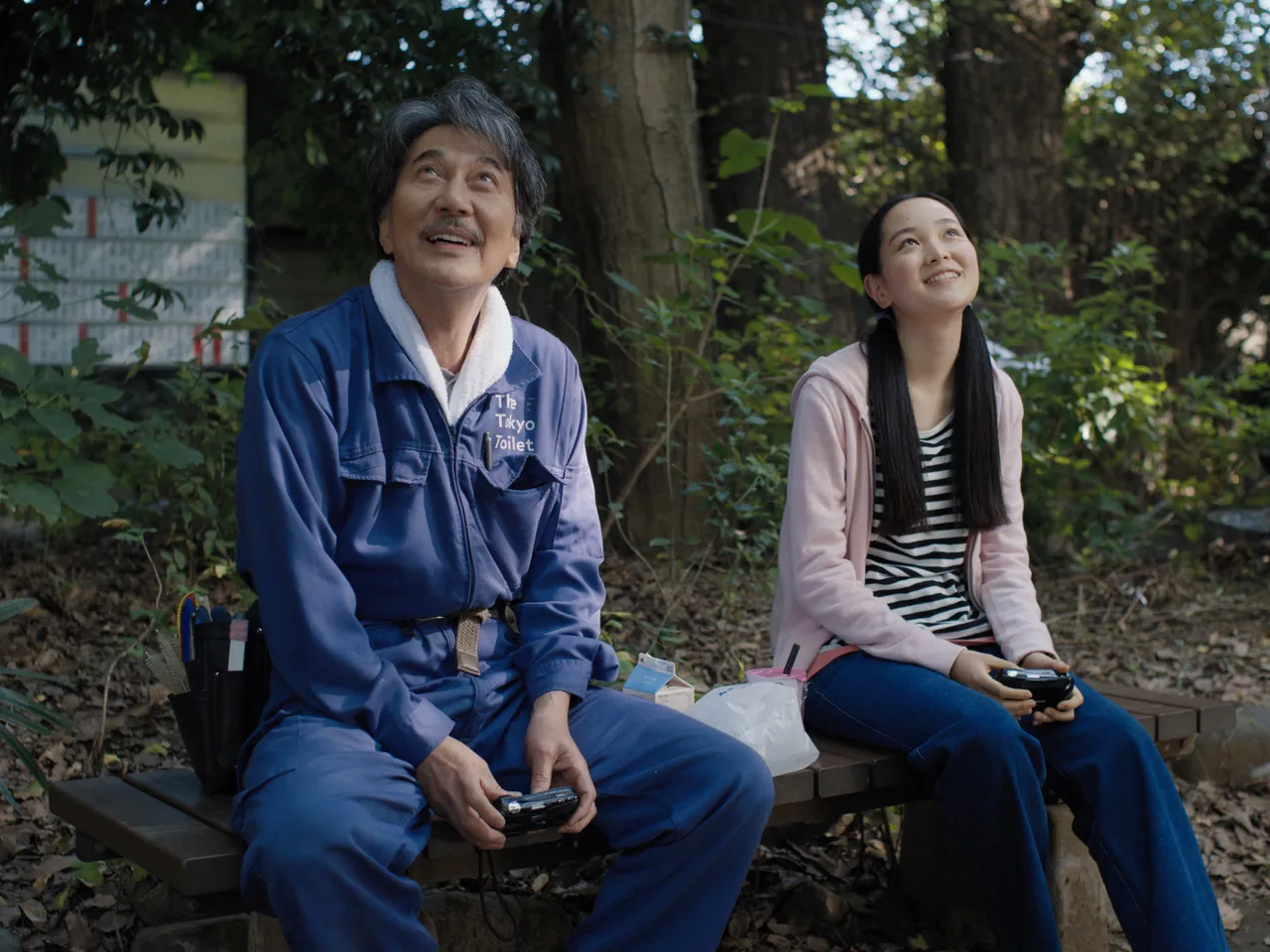
"Next time is next time. Now is now."
- You are not interested in slow-paced, introspective cinema
- You have a distaste for films featuring jobs or situations that may be considered "gross" or unpleasant
- You prefer movies with a clear, straightforward narrative and don't enjoy films that leave interpretations up to the audience
- You are not comfortable with elements of Buddhism or spiritual meditation practices
- You are looking for fast-paced action, adventure, or romantic storyline. This film mostly focuses on inner peace and contentment
- You are under 15, some of the themes and visuals might be too adult-oriented
Warning: The following may contain spoilers:
What's the deal with "Perfect Days"? I mean, the title itself is a joke, right? The protagonist, Hirayama, is knee-deep in the porcelain trenches day in and day out. And yet, he's smiling like he just found a winning lottery ticket stuck in the u-bend!
He's making merry in the midst of muck. It's like a guy in the middle of a hurricane, saying, "Well, I always enjoyed a light breeze."
"Perfect Days" is like a Zen koan wrapped in a sanitary wipe. A used sanitary wipe. That you just got handed.
I mean, if someone can find enlightenment in a toilet bowl, maybe we're all just flushing our happiness away.
The Straight Story (1999):
If you appreciated "Perfect Days," "The Straight Story" is a beautifully contemplative film that also delves into the themes of simplicity and finding peace in everyday moments. Directed by David Lynch, this film tells the true story of an elderly man who travels across the American Midwest on a riding lawnmower to reconcile with his ailing brother. Much like Hirayama, the protagonist comes to terms with life’s challenges in a quiet, unassuming manner, embracing the journey rather than the destination. The film is rich in character and offers a meditative experience that resonates with the notion of happiness found in small, significant interactions.
Paterson (2016):Like this? Then click here to see more drama movies