Pub.lished Movie Reviews
Harold and Maude (1971)
Please note, this review contains some plot spoilers.
"Harold and Maude" (1971) is a quirky dark comedy that revolves around the life of Harold Chasen, a young, wealthy man with an unusual obsession with death. Harold's daily activities include staging fake suicides, attending funerals of strangers, and driving a hearse, much to the dismay of his self-absorbed socialite mother. In an attempt to normalize his life, his mother sends him to a psychoanalyst, sets him up on blind dates, and even tries gifting him a luxury car. But Harold, being the misfit he is, subverts each of these attempts in his own way.
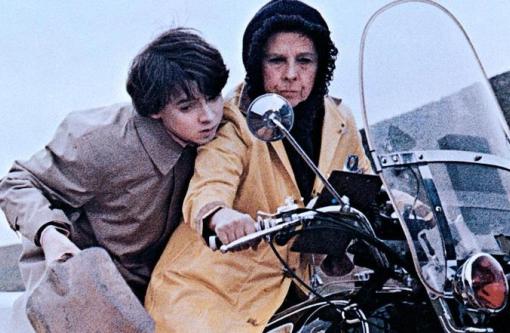
Harold's life changes dramatically when he meets Maude, a lively septuagenarian, at a random stranger's funeral. They quickly form a connection over their shared hobby of attending funerals. Harold is captivated by Maude's cheerful and carefree outlook towards life, a stark contrast to his own dark demeanor. Living in a decommissioned railroad car, Maude is a free spirit who doesn't think twice about breaking the law. She is an expert car thief and doesn't hesitate to uproot an ailing tree from public property to replant it in the forest. Maude becomes a guiding light to Harold, introducing him to the pleasures of art and music, teaching him to play the banjo, and instilling in him the importance of making the most of his time on earth.
While Harold and Maude's unique bond deepens, Harold's mother remains hell-bent on finding him a suitable wife. Harold, however, manages to scare off each of his arranged dates by pretending to commit horrific acts such as self-immolation, self-mutilation, and even seppuku. In a desperate attempt, Harold's mother tries to enlist him in the military, sending him to his uncle, a war veteran who lost an arm serving under General MacArthur in the Second World War. But Harold manages to thwart this plan as well, by staging a scene where Maude poses as a pacifist protester whom Harold seemingly murders out of militaristic fanaticism.
In essence, "Harold and Maude" is an amusingly dark comedy that explores a relationship between two polar opposites. It's a delightful tale of a uniquely wicked relationship that teaches us about the beauty of life and the importance of living it to the fullest. The movie provides a refreshing perspective on life and death, making it a classic worth watching.
- You are uncomfortable with dark humor or themes of morbidity and death.
- You are not comfortable with unconventional romantic relationships, particularly ones involving significant age differences.
- You dislike movies that challenge societal norms.
- You have a low tolerance for vintage film styles or production techniques.
- You prefer movies with clear, traditional narratives and outcomes.
Warning: The following may contain spoilers:
What's the deal with "Harold and Maude?"You've got this young guy, Harold, who's obsessed with staging his own death, and then falls in love with a 79-year-old woman, Maude. I mean, talk about a generation gap! When they go out for dinner, does she get the senior discount and he gets the kids menu? And you thought your family gatherings were awkward!
And the dates these two go on! Most people go to the movies, maybe a nice dinner. These two? They're attending funerals for fun! Imagine that conversation, "Hey, honey, I heard about a great funeral happening this Saturday. Wanna go?"
And then there's Maude, stealing cars left and right because she believes in 'experiencing life.' Most people experience life by, I don't know, not committing felonies? And yet, she's the most cheerful car thief you'll ever meet.
American Beauty (1999)
"Harold and Maude" (1971) and "American Beauty" (1999) are profound, thought-provoking films that explore the themes of existentialism, unconventional romance, societal norms, and death. The dark humor, unique character dynamics, and examination of suburban disillusionment present in both films make them appealing to audiences who appreciate narratives that challenge the status quo and delve into the human condition. Both films are known for their aesthetic cinematography, memorable soundtracks, and standout performances, thus making "American Beauty" a likely hit for fans of Harold and Maude.
Little Miss Sunshine (2006)If you enjoyed the quirky characters and offbeat humor in "Harold and Maude," you're likely to appreciate "Little Miss Sunshine." This film is a heartwarming road trip story about a dysfunctional family, and like "Harold and Maude," it skillfully marries comedy with deeper thematic explorations of life, death, and family dynamics.
Citizen Kane (1941)"Harold and Maude" and "Citizen Kane" explore unconventional narratives and relationships, showcasing the complexity of human emotions and social dynamics. They employ innovative cinematography and storytelling techniques that were ahead of their time, making them timeless classics. While both films differ in theme and tone, their nuanced character development, introspective themes, and poignant exploration of life, death, and the human condition make them compelling and emotionally resonant. If you appreciate the eccentricity, emotional depth, and cinematic innovation of "Harold and Maude," you will likely also appreciate the richness and depth of "Citizen Kane."
The Graduate (1967)Those who love "Harold and Maude" (1971) will also love "The Graduate" (1967) as both films delve into complex themes of rebellion against societal norms, existential crises, and unconventional romantic relationships, all while using a blend of dark humor and poignant drama. They feature young male protagonists who, feeling alienated from their respective societies, embark on transformative journeys catalyzed by relationships with older women. The witty dialogue, memorable soundtracks, and strong performances, coupled with the masterful storytelling of both films, make them enduring classics that resonate with audiences who appreciate the exploration of youth, nonconformity, and unconventional love.
Midnight Cowboy (1969)Both "Harold and Maude" (1971) and "Midnight Cowboy" (1969) are iconic films that challenge social norms and explore unconventional relationships, set against the backdrop of existential themes. The former, a dark comedy, delves into a romantic relationship between a young man and an elderly woman, while the latter, a drama, explores the deep friendship between a naive hustler and a sickly con man. Each film's unique storytelling, memorable characters, and exploration of life, death, and companionship are bound to resonate with those who appreciate the offbeat charm and emotional depth of Harold and Maude.
Taxi Driver (1976)"Harold and Maude" (1971) and "Taxi Driver" (1976) are renowned films that explore themes of alienation, mental health, and unconventional relationships, set against a backdrop of societal issues. Their main characters, Harold and Travis, are both outsiders, struggling to find their place in a world they view as deeply flawed. While "Harold and Maude" infuses dark humor in its portrayal, "Taxi Driver" adopts a grimmer tone, but both films share a deep, introspective look at human relationships and societal norms, which could appeal to the same audience.
Raising Arizona (1987)"Harold and Maude" (1971) and "Raising Arizona" (1987) are distinctive films that delight in their own quirky, offbeat humor and unique characters. They share a similar approach to storytelling by using dark humor and unconventional narrative techniques to explore deeper themes of life, love, and morality. Harold and Maude's unconventional romance and the wild misadventures of "Raising Arizona" resonate with viewers who appreciate films that defy traditional genre expectations and enjoy a blend of comedy and poignant, emotional moments.
Rushmore (1998)"Harold and Maude" (1971) and "Rushmore" (1998) are offbeat, quirky comedies that defy traditional storytelling with their unusual plots and eccentric characters. Their humor is dry, sophisticated, and subtly dark, appealing to viewers who appreciate a break from the norm. They both explore themes of unconventional love, obsession, and the struggle to find one's place in the world, all set against a backdrop of striking visuals and memorable soundtracks. Therefore, those who enjoy the unique charm and depth of "Harold and Maude" will likely appreciate the similar qualities in Rushmore.
Best in Show (2000)Both "Harold and Maude" and "Best in Show" are characterized by their offbeat humor, endearing characters, and unique narratives that stray from mainstream comedy. They share a quirky sensibility and an ability to find humor in the unconventional. The dark comedy and existential themes of "Harold and Maude" find a parallel in the witty mockumentary style of "Best in Show," which satirizes the eccentricities of dog show participants. Fanciers of the former would appreciate the latter's clever dialogue, character-driven humor, and insightful social commentary.
Being There (1979):For fans of "Harold and Maude," "Being There" is a must-watch. Directed by Hal Ashby, who also directed "Harold and Maude," this dark comedy stars Peter Sellers in one of his most iconic roles. The film cleverly integrates humor with poignant social commentary, much like "Harold and Maude."
The Royal Tenenbaums (2001):Directed by Wes Anderson, "The Royal Tenenbaums" offers a mix of eccentric characters, dry humour, and an intimate look at family relationships that feels reminiscent of "Harold and Maude." The movie's visuals and storytelling style are distinctly Anderson-esque, providing a uniquely satisfying viewing experience.
Life of Brian (1979):This classic Monty Python comedy might appeal to you if you enjoyed the dark humor of "Harald and Maude." Just like in "Harold and Maude," the humor in "Life of Brian" is combined with profound commentary on life and societal norms, delivered in the unique Monty Python style.
Frances Ha (2012):For fans of unique storytelling and unconventional lead characters as in "Harold and Maude," "Frances Ha" is an ideal choice. Directed by Noah Baumbach, the film follows the quirky and lovable Frances as she navigates her way through adulthood in New York City. The film's balance of humor and heart might remind you of your favorite elements from "Harold and Maude."
Like this? Then click here to see more comedy movies