Pub.lished Movie Reviews
American Beauty (1999)
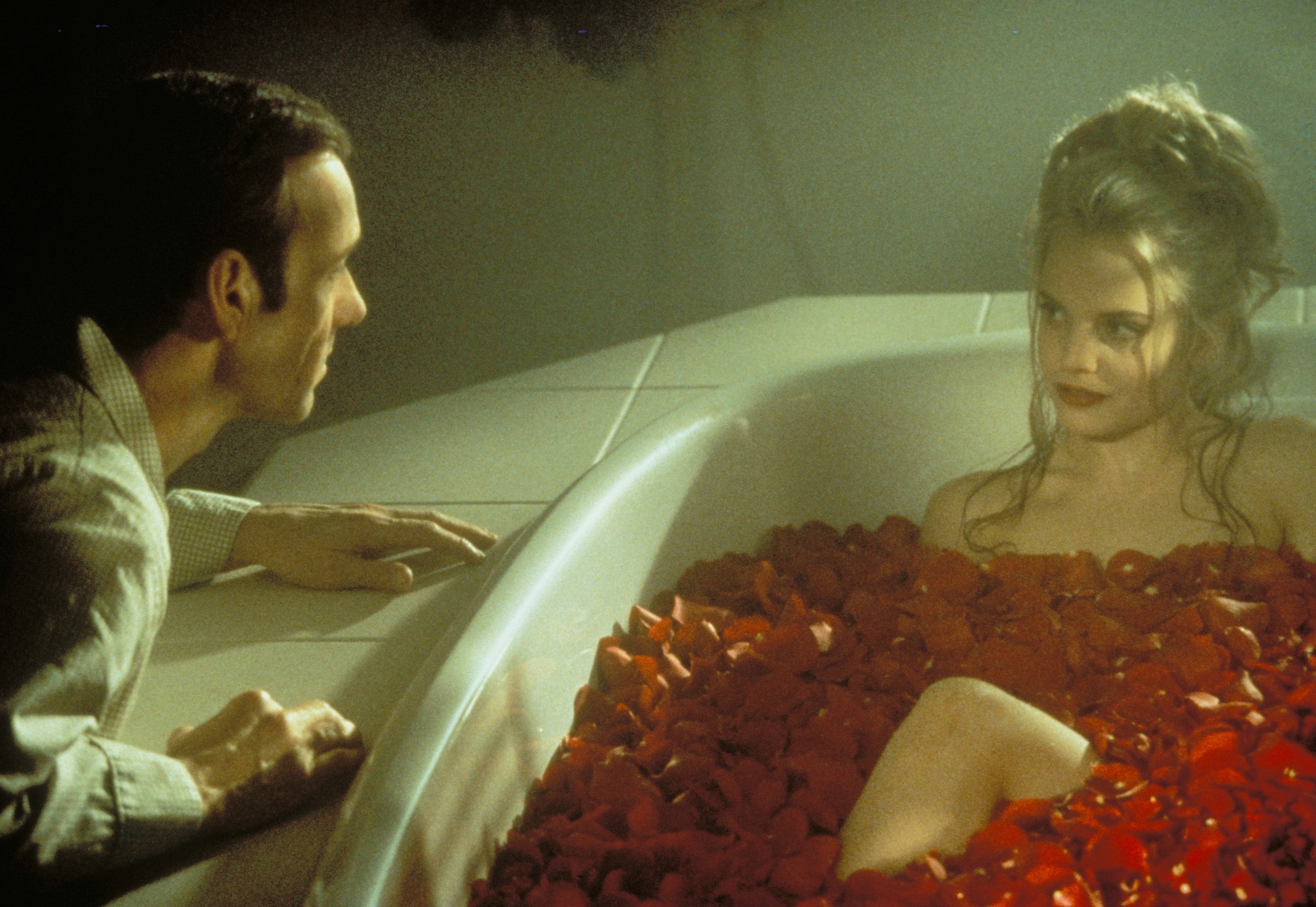
Captures the Gen X zeitgeist."American Beauty" (1999) is an unconventional film that delves into themes of ennui, dissatisfaction, and desire, reminding viewers that it's never too late to make a change, appreciate the beauty of the present moment, and choose happiness. The film paints a progressively dark and cynical portrait of American suburban culture, suggesting that societal norms often lead to loneliness, depression, and an unhealthy obsession with materialism.
Nearly every character in the film is either conforming to societal expectations and experiencing unhappiness as a result, or living life on their own terms and finding happiness in doing so. The character Ricky serves as the catalyst for the film's events. Despite his young age, Ricky exhibits a remarkable emotional maturity that surpasses all other characters.
This can be traced back to a revelation he experienced, as depicted in the poignant "dancing bag scene." This powerful moment allowed Ricky to fully grasp the inherent beauty of life, regardless of the hardships one might face. He comes to understand that the world, if you let it, can be a benevolent place. Ricky's unique perspective ensures that his happiness remains unscathed by external circumstances. He is constantly able to see the world's beauty and find joy in it.
The characters in "American Beauty" either learn to see life through Ricky's optimistic lens, or they continue to wallow in their unhappiness. This stark contrast serves as a powerful commentary on the choices we make and their impact on our happiness. The film is a stark reminder that societal expectations often lead to dissatisfaction, and true happiness can only be found when we choose to live life on our own terms.
- You are uncomfortable with themes of infidelity and marital dissatisfaction.
- You prefer movies that have a simple, straightforward story without multiple subplots.
- You are looking for an action-packed film. This is more of a domestic drama.
- The movie is rated R for strong sexuality, language, violence, and drug content, hence not recommended for viewers under the age of 17.
- You prefer light-hearted movies. This film deals with heavy themes and has a contemplative tone.
Warning: The following may contain spoilers:
What's the deal with "American Beauty?"I mean, is it a midlife crisis movie, or is it a gardening show? One minute, Kevin Spacey's moping around in a cubicle, the next he's pruning roses like Martha Stewart on steroids! And who knew plastic bags could be so mesmerizing? I've got a cupboard full of them, I'm sitting on a gold mine here!
Magnolia (1999)
Directed by Paul Thomas Anderson, this film might catch your interest if you enjoyed American Beauty. Set in Los Angeles, 'Magnolia' weaves together a multitude of narratives about the complex relationships between parents and children. With an ensemble cast including Tom Cruise and Julianne Moore, it expertly explores themes of loneliness, love, and redemption, much like American Beauty.
Harold and Maude (1971)Those who love "American Beauty" (1999) will also love "Harold and Maude" (1971) because both films delve into the themes of existentialism, dark humor, and unconventional romance, challenging societal norms and expectations. Both films explore the idea of finding beauty and happiness in the mundane and seemingly trivial aspects of life, with characters who rebel against their predetermined societal roles. The satirical approach to suburban life in "American Beauty" is mirrored in "Harold and Maude" through its depiction of the absurdity of societal conformity, making both films a must-watch for those who appreciate thought-provoking dark comedies.
Moulin Rouge (1952)"American Beauty" (1999) and "Moulin Rouge" (1952) are visually extravagant films with profound commentaries on the human condition. They both explore themes of love, obsession, and the pursuit of personal freedom in a society that values conformity. Each movie uses innovative film techniques and stunning visuals to enhance the storytelling and provoke emotional responses. The complexities of the characters and the power of the narrative make these films compelling and engaging, making "Moulin Rouge" a must-watch for fans of American Beauty.
Garden State (2004)"American Beauty" and "Garden State" delve into profound themes of suburban ennui, self-discovery, and the pursuit of genuine happiness amid societal expectations. Each film features compelling performances, notably from Kevin Spacey in "American Beauty" and Zach Braff in "Garden State," that perfectly encapsulate the existential crises of their respective characters. Their narratives are also driven by dark humor, dramatic irony, and a touch of romance, all ensconced in visually stunning imagery. Therefore, if you appreciate the introspective journey and the insightful commentary on life's absurdities in "American Beauty," you will likely enjoy the similar narrative approach in Garden State.
Mad Hot Ballroom (2005)Connoisseurs of "American Beauty" (1999) will also appreciate "Mad Hot Ballroom" (2005) because both films delve into the exploration of human emotions, societal norms, and the beauty and complexities of life through unique perspectives. While "American Beauty" provides a satirical view of American suburban life, "Mad Hot Ballroom" offers an inspiring and heartwarming look at the lives of New York City school kids learning ballroom dancing. Each film invites viewers to challenge their preconceptions and to appreciate the extraordinary in the seemingly ordinary, encapsulating the human spirit's resilience and desire for self-expression.
Requiem for a Dream (2000):Directed by Darren Aronofsky and based on a novel by Hubert Selby Jr., Requiem for a Dream is a powerful portrayal of substance dependence and the variable realities it creates. Similar to American Beauty, it's equally gripping and tragic, offering a unique examination of human desires and aspirations.
Eternal Sunshine of the Spotless Mind (2004):This film, directed by Michel Gondry and starring Jim Carrey and Kate Winslet, unfolds a non-linear narrative about a couple who undergo a procedure to erase each other from their memories when their relationship turns sour. If you loved American Beauty for its nuanced exploration of relationships and the human psyche, this movie will likely resonate with you.
The Hours (2002):Starring Meryl Streep, Julianne Moore, and Nicole Kidman, The Hours is a thoughtful, introspective movie about three women living in different eras, whose lives are interconnected by Virginia Woolf's novel 'Mrs. Dalloway'. Its deep exploration of life's salient moments and human connection can be compared to the narrative approach shown in American Beauty.
Lost in Translation (2003):A film that beautifully captures feelings of alienation and existential angst. Directed by Sofia Coppola, it tells the story of two lost souls in Tokyo who find solace in their unlikely friendship. Its quiet exploration of life, love, and purpose could be appealing if you value the thematic elements of American Beauty.
Like this? Then click here to see more drama movies