Pub.lished Movie Reviews
The Player (1992)
"The Player" is a veritable who's who of Hollywood. With the sheer volume of cameos, it can be difficult to distinguish between those making guest appearances as themselves and those truly acting in the film.
Once the narrative begins to unfold, it presents an intriguing exploration of Hollywood greed and avarice.
I have a personal preference for "Swimming with Sharks", a film that places greater emphasis on the storyline, rather than showcasing the Hollywood elite.
It's challenging to take a film seriously when it aims to critically examine Hollywood, while simultaneously highlighting its who's who.
"Movies, Now More Than Ever!"
- You are not interested in Hollywood or the film industry.
- Brief moments of violence and gore
- You don't enjoy satirical or meta films.
- You're looking for a light-hearted comedy or children's movie.
- You are under the age of 15 as it has some mature content.
Warning: The following may contain spoilers:
What's the deal with "The Player"?
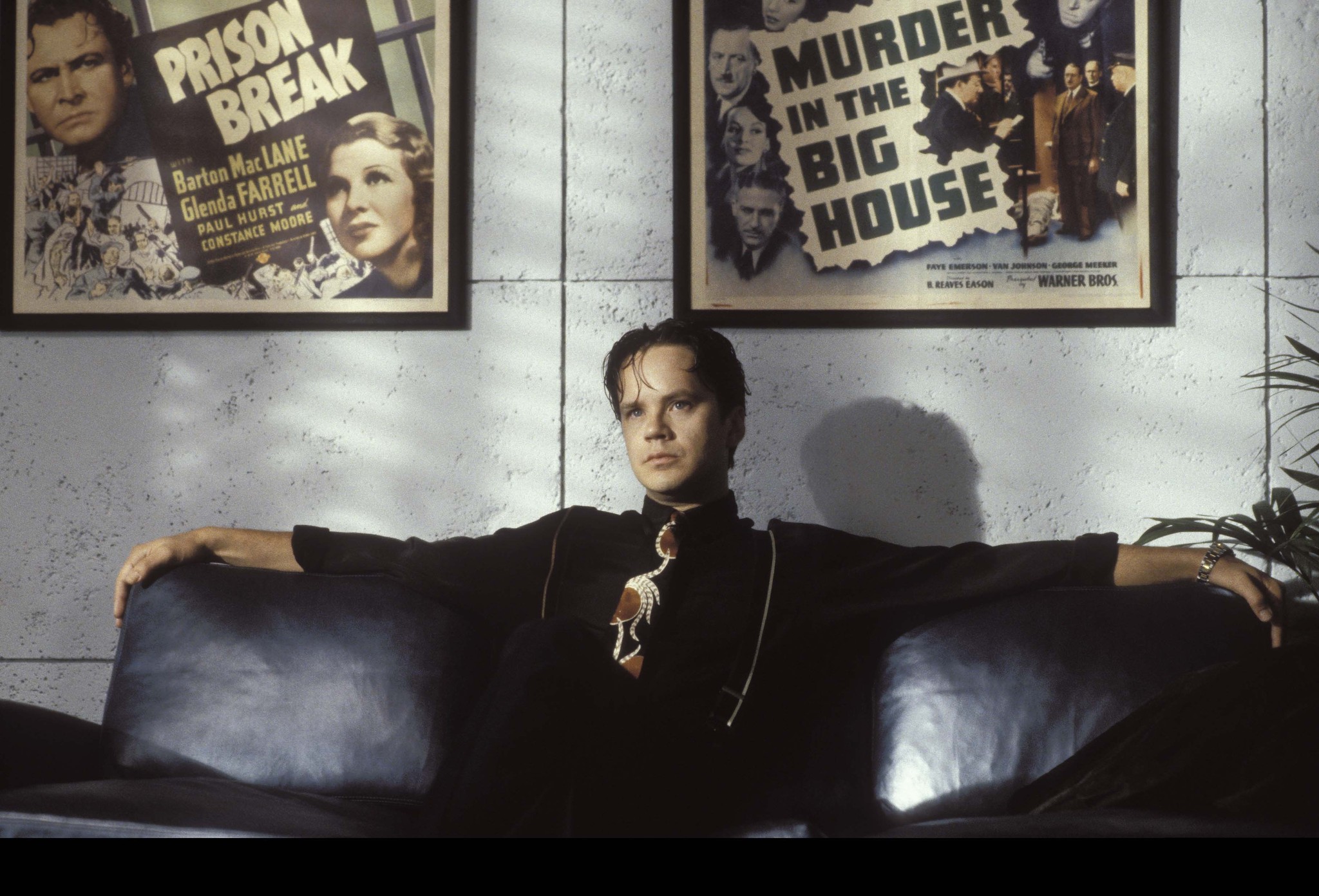
First off, we've got Tim Robbins playing a movie exec, which is like having a vegan run a steakhouse. He's all tall and gangly, and yet he's supposed to be this suave, cutthroat Hollywood bigwig. I don't know about you, but when I think of a movie executive, I'm thinking more Mr. Fantastic, less Mr. French Fry.
Then there's the godforsaken number of cameos. I mean, it's like a who's who of Hollywood. Everyone from Cher to Julia Roberts pops up. It's like they were handing out roles like samples at a Costco. At one point, I half expected the camera to pan over and see my grandmother making a guest appearance.
The most ironic part is that "The Player" is supposed to be a satire of Hollywood. But it's made by Hollywood, stars Hollywood, and is about Hollywood. That's like McDonald's making a documentary about the dangers of fast food.
American Beauty (1999)
"The Player" and "American Beauty" are satirical examinations of the American lifestyle, presenting a cynical yet insightful perspective on societal norms and expectations. They seamlessly blend drama and dark humor, offering viewers a biting critique of American culture while still providing an engaging narrative. Both films are filled with top-notch performances, sharp screenwriting, and masterful direction, making them must-watch movies for fans of critical and thought-provoking cinema.
Memento (2000)"The Player" and "Memento" are critical darlings known for their unique storytelling, satirical commentary, and noir elements. "The Player" offers a cynical and satirical view of Hollywood's film industry with its meta-narrative and intricate plot twists, while "Memento" is celebrated for its unconventional, non-linear narrative structure that builds suspense and engages the viewer in a complex mystery. Both films require the audience's attention and intellectual engagement, offering a rewarding viewing experience for those who enjoy suspenseful, thought-provoking cinema.
Citizen Kane (1941)Enthusiasts of "The Player" will love "Citizen Kane" as both films provide a critical examination of the film industry and media power dynamics. "The Player" is a satirical critique of Hollywood's corporate culture, while "Citizen Kane" explores the corrupting influence of power and wealth in the media industry. Both films are filled with layers of complexity, rich storytelling, and iconic cinematography, providing an intriguing and engaging viewing experience. Moreover, both films require viewers to pay close attention to details and themes, enhancing their appreciation of cinema as an art form.
The Graduate (1967)"The Player" and "The Graduate" are critically acclaimed films that offer incisive satire and commentary on their respective societies. They share a common thread in their exploration of themes like ambition, manipulation, and the loss of innocence. In addition, both movies boast of strong performances, sharp dialogue, and innovative filmmaking techniques. Admirers of "The Player's" darkly comedic and meta-fictional approach to Hollywood's inner workings will appreciate "The Graduate's" similar satirical take on the disillusionment of the American Dream and the emptiness of upper-middle-class life. The nuanced character studies and the morally complex narratives in both films make them compelling viewing for discerning cinephiles.
Taxi Driver (1976)Lovers of "The Player," a film known for its satirical take on Hollywood's film industry, will also enjoy "Taxi Driver" for its equally critical look at society, specifically New York City in the 70s. Both movies offer a dark and cynical perspective, showcasing the underbelly of their respective environments through the eyes of their complex, morally ambiguous protagonists. Plunging into themes of alienation, corruption, and personal redemption, these films are marked by their gritty realism, rich character development, and top-notch performances, offering an absorbing and thought-provoking cinematic experience.
This Is Spinal Tap (1984)"The Player" and "This Is Spinal Tap" are satirical films that humorously critique aspects of the entertainment industry. "The Player" focuses on the cutthroat business of Hollywood filmmaking, filled with insider jokes and a darkly comedic plot, while "This Is Spinal Tap" mocks the pretentiousness and excesses of rock 'n' roll bands. Both movies are characterized by their sharp-witted humor, memorable characters, and biting commentary, making them a perfect pair for those who appreciate clever and incisive satires about the entertainment world.
Raising Arizona (1987)Both "The Player" (1992) and "Raising Arizona" (1987) are satirical films that offer a clever, comedic commentary on their respective subjects, Hollywood and family life. They share a love for unconventional storytelling, employing elements of film noir and slapstick comedy. Their intricate plots, filled with twists and turns, are brought to life by a colorful cast of characters. If you appreciate the dark humor, sharp dialogue, and sophisticated narratives in "The Player," you will likely enjoy the similar style and tone in "Raising Arizona."
Trainspotting (1996)Both "The Player" (1992) and "Trainspotting" (1996) are films that break from traditional narrative structures and delve into the darker aspects of human nature, offering a satirical and cynical view of society. They are characterized by their sharp, witty dialogue, unique storytelling techniques, and complex characters. These movies also boast impressive performances from their respective ensemble casts and are directed by acclaimed directors Robert Altman and Danny Boyle. If you enjoy provocative themes, biting social commentary, and innovative filmmaking, you'll likely appreciate both films.
Rushmore (1998)Those who love "The Player" (1992) will also love "Rushmore" (1998) due to the sharp, witty, and satirical commentary both films offer on their respective settings - Hollywood and an elite prep school. Both films are dark comedies that utilize meta-narratives, insider references, and complex, flawed characters to create rich, immersive worlds. "Rushmore," like "The Player," is a critique of its environment, filled with eccentric characters and infused with a unique blend of humor and drama. Both films are intricate, intelligent, and captivating, making them a must-watch for fans of satirical and sophisticated cinema.
Best in Show (2000)"The Player" and "Best in Show" are both satirical comedies that offer insightful commentary about their respective industries, Hollywood and dog shows. They employ a similar style of humor, utilizing irony and dry wit, and both feature a large ensemble cast of colorful, quirky characters. The mockumentary style of "Best in Show" mirrors the self-referential, meta-fictional elements of "The Player", making it equally appealing to those who appreciate clever, unconventional storytelling and the deft skewering of societal norms and pretensions.
Barton Fink (1991):Just like "The Player", "Barton Fink" also delves into Hollywood, but from a somewhat different angle. Directed by the Coen brothers, it's a dark comedy that follows an intellectual playwright who moves into the film industry and finds himself strangled in a surreal nightmare. Not only does it showcase Hollywood's monstrous side, but it can also be considered an artist's reflection on the process of creation.
Network (1976):"Network", directed by Sidney Lumet, is an excellent film for anyone who enjoyed 'The Player'. It's a satire on the television industry - its penchant for exploiting personal tragedies for ratings and its corruption. The scathing script by Paddy Chayefsky gives a cynical view of media and its influence on the masses, which overall makes "Network" a relevant watch even today.
Sunset Boulevard (1950):If you enjoyed the exploration of the dark underbelly of Hollywood in "The Player", you would likely enjoy "Sunset Boulevard." Directed by Billy Wilder, it's a film noir about a struggling screenwriter who finds himself involved with a faded silent-film star. Its sharp-edged commentary on fame, fortune, and delusion in Hollywood can be seen as timeless.
Adaptation (2002):"Adaptation", directed by Spike Jonze, is really a film for those who loved the meta-narrative of "The Player". It's a semi-autobiographical film that tracks the struggles of a screenwriter (played by Nicolas Cage) to adapt a non-fiction book into a movie, while his less talented but thriving twin brother also becomes a screenwriter. Both hilarious and deep, it's a movie about the process of adaptation itself.
The Big Picture (1989):For those who enjoy films about the film industry like "The Player", "The Big Picture" is definitely a treat. Directed by Christopher Guest, the movie follows a film school grad who wins a student film contest and is thrust into the Hollywood scene, only to find his dreams and artistic integrity gradually compromised. It's a light-hearted snapshot of the movie business, filled with clever humor and satirical edge.
Like this? Then click here to see more comedy movies